
Everyone in this trade says mesh is better for hot climates because it breathes. That is true and it is also the least interesting half of the answer. The other half is foam density, and it decides whether the chair you sold in Lagos is still comfortable in year three.
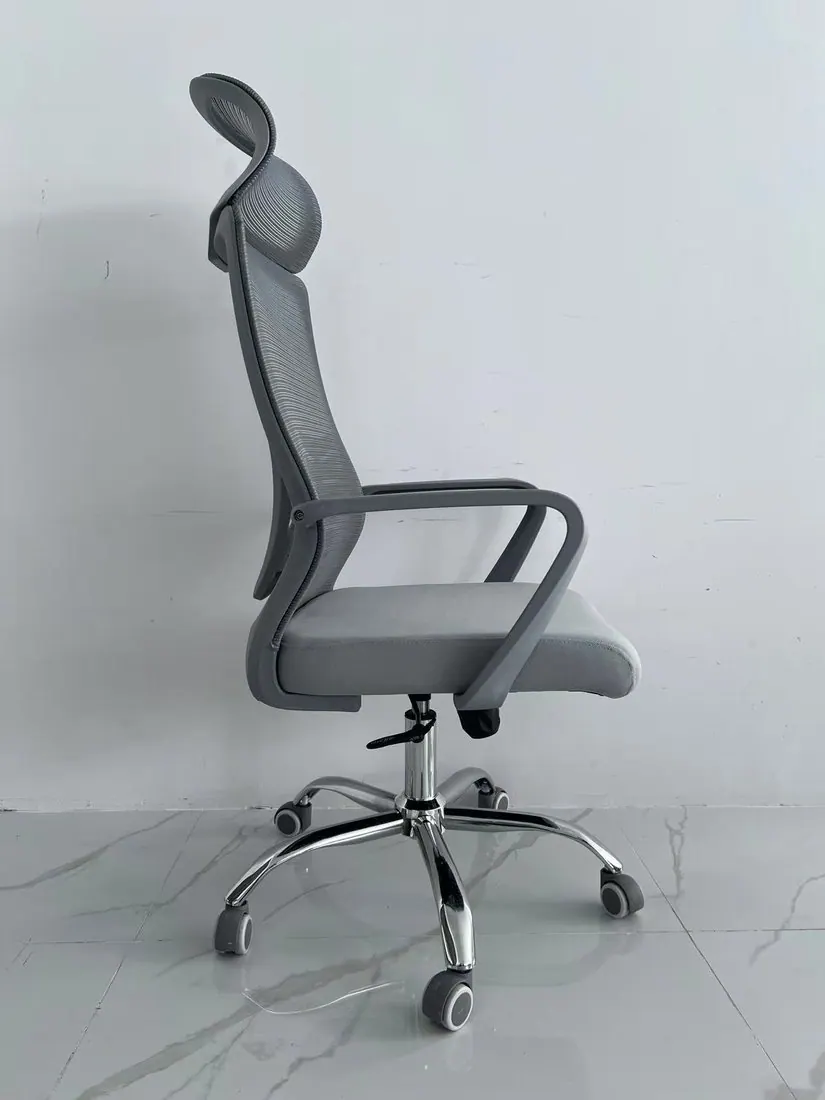
Airflow is a back problem, not a seat problem
A mesh back solves the part of the body that sweats against a surface all day. A mesh seat solves a different problem, and it introduces a new one.
Mesh seats need tension. The mesh is stretched across a frame and the frame carries the load. On a well-built seat the tension is set so that the mesh gives 10 to 20 mm under an 80 kg user — enough to distribute pressure, not enough to bottom out on the frame. On a cheap seat the mesh is thin, the frame is light, and after a year of daily use the mesh sags until the user is sitting on a steel rail. There is no repair for that; the seat is bonded or riveted, and the chair is scrap.
The practical rule: a mesh seat belongs on a chair where the frame is a glass-filled nylon shell of at least 3 mm, not a 1.5 mm pressed steel ring with mesh stretched over it.
Foam is where hot climates actually destroy chairs
Seat foam is measured in density, kg/m³. Density is not softness — you can make hard foam and soft foam at the same density — it is how much material is in the seat.
- 22 – 28 kg/m³: promotional furniture. Feels fine in the showroom. Loses 20 to 30% of its thickness within 18 months at 40 °C and 85% relative humidity.
- 30 – 35 kg/m³: mid-market. Acceptable in air-conditioned offices, marginal without air conditioning.
- 40 – 45 kg/m³ moulded foam: contract grade. Holds shape, and the moulded skin keeps moisture out of the core.
Two mechanisms do the damage. The first is compression set — foam that stays compressed under a body for eight hours a day gradually stops recovering. Test it as ASTM D3574: hold a sample at 70 °C for 22 hours, release, measure. Contract foam should come back to within 5% of its original thickness; cheap foam can lose 15%.
The second is hydrolysis. Polyurethane foam absorbs water vapour from humid air and the polymer chains break down. The seat does not tear. It turns into powder at the core while the surface still looks intact, and then one day the cover is a loose bag over nothing.
Field test you can run yourself: put a seat sample in a sealed box with a tray of water, keep it at 40 °C for 72 hours, then press the centre with a thumb and compare with an untreated sample. Foam that has gone soft and crumbly in three days will not survive three years.
Fabric in humidity: the mildew problem
Polyester fabric is the standard for office seating and it does not rot. It does grow mildew in a humid, non-air-conditioned room, especially on the seat where sweat and dust collect. The visible result is a grey bloom along the seams and the piping.
Three things help, and only one of them is a fabric choice:
- An antimicrobial finish on the foam and the fabric backing. Cheap to add, and it is the difference between a complaint and no complaint in year two.
- Ventilation channels moulded into the foam, so moisture has somewhere to go instead of sitting against the shell.
- A removable, washable cover — rare on export chairs because it adds cost and a zipper failure mode, but worth asking about for hospitality and clinic projects.
The decision, by market
| Situation | Back | Seat | Why |
|---|---|---|---|
| Air-conditioned office, Europe | Mesh or fabric | Fabric, 35 kg/m³ | Airflow is not the constraint; cost and comfort are |
| Non-AC office, Gulf or West Africa | Mesh | Mesh, or fabric at 40+ kg/m³ | Airflow plus hydrolysis resistance |
| Coastal, high humidity, no AC | Mesh | Mesh with a nylon shell | Foam is the weak point; remove it |
| Call centre, 16 hours a day | Mesh, high back | Moulded foam, 45 kg/m³ | Duty cycle, not climate, drives the spec |
| Meeting and training rooms | Either | Fabric, 30 kg/m³ | Two hours a day does not fatigue foam |
What it costs
Moving from a cheap fabric seat to a 45 kg/m³ moulded foam seat adds roughly USD 1.50 to 3.00 per chair. A mesh seat over a proper shell adds USD 3.00 to 6.00, and it removes the foam entirely — which for a humid market is not just a comfort decision but a warranty one.
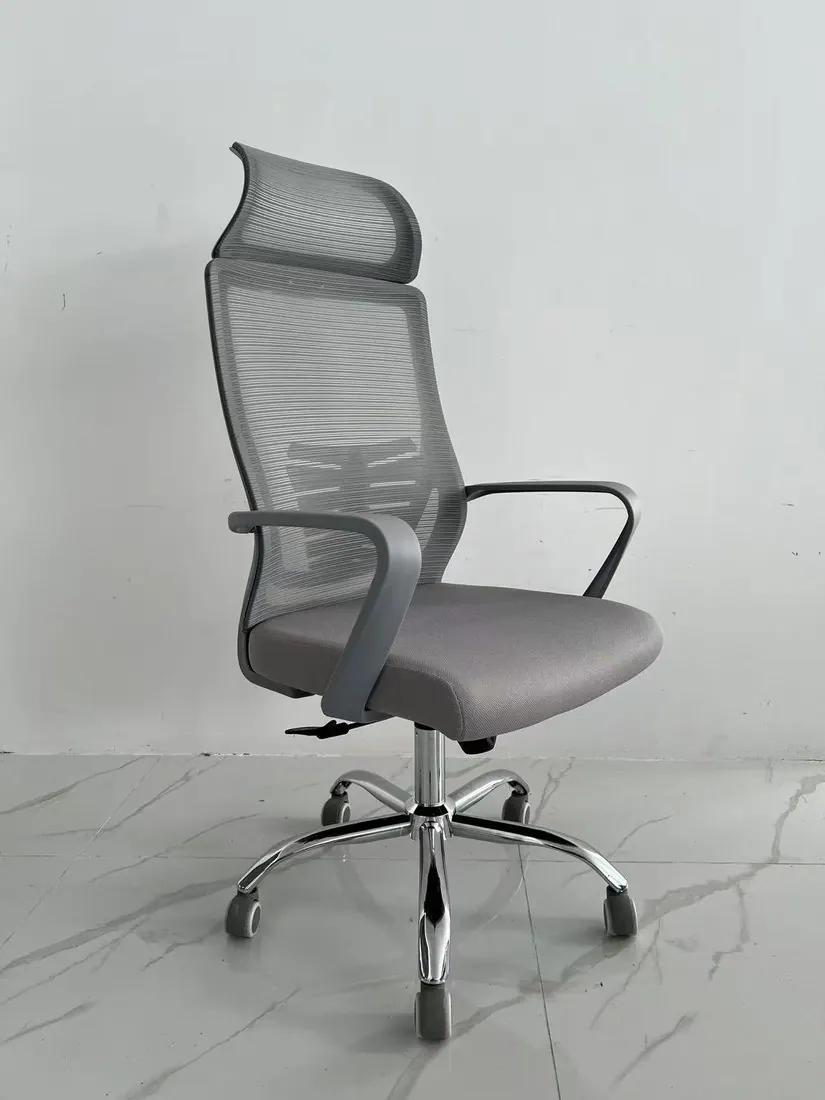
The specification paragraph that prevents the argument
Write it into the order like this, and add the sampling requirement:
Seat: moulded polyurethane foam, density ≥ 40 kg/m³, compression set ≤ 5% per ASTM D3574 (22 h at 70 °C), antimicrobial treated, 8 mm plywood or nylon load plate. Fabric: 100% polyester, 250 – 300 g/m², Martindale ≥ 30,000 cycles, colourfastness to light ≥ 4. Test: third-party foam density certificate for the production batch, not the sample.
The last sentence is the one that matters. Foam density is invisible from the outside, easy to substitute, and impossible to check without cutting a seat open. A batch certificate is the only practical control a buyer has at a distance.
Send us the destination city and whether the building is air-conditioned. We will tell you which seat specification survives there, and what it adds to the FOB price.
Ask a questionMesh chairs