
Four checkpoints, in this order: incoming components, in-line assembly, function test, packing. The first three catch defects. The fourth catches money — and it is the one most factories skip when the container is waiting.
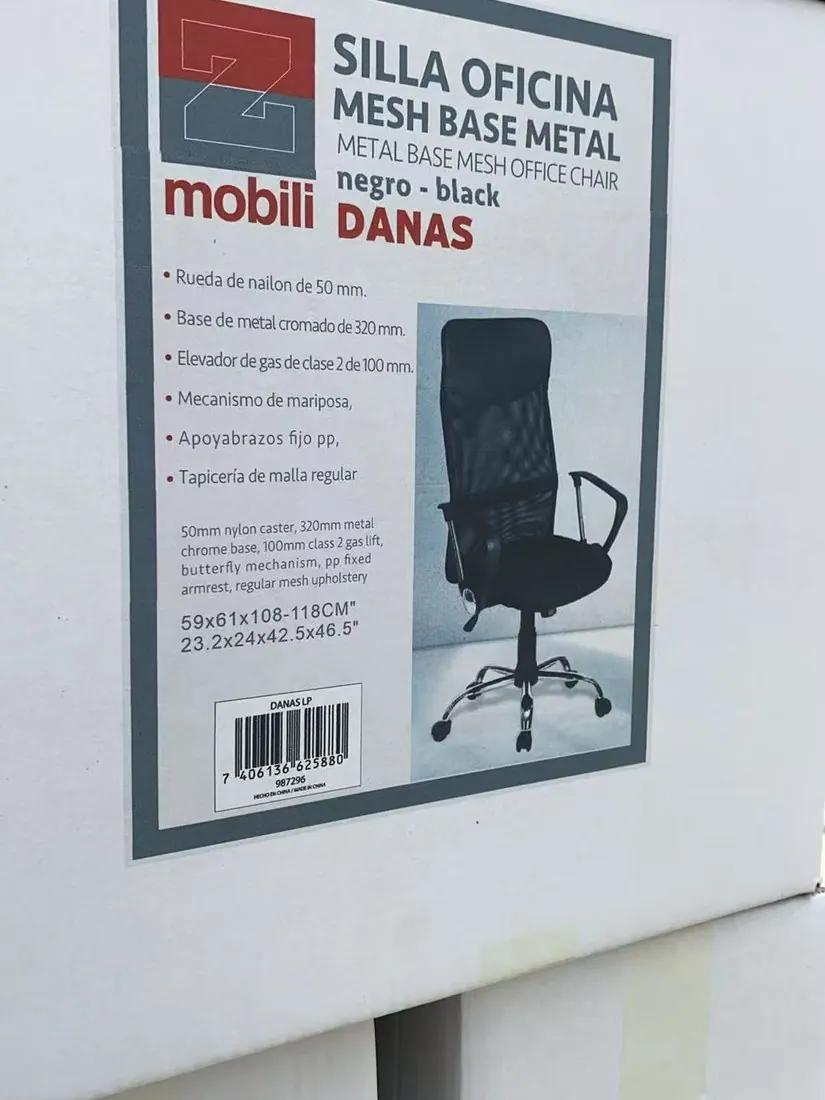
1. Incoming components
Most of the defects that reach a customer arrive at the factory, not inside it. The check that stops them is unglamorous: sample the incoming batch against the specification before it goes to the line.
- Cylinders. Class marking present, correct stroke, weight within range. Ten pieces per batch, weighed.
- Bases. Wall thickness on a section, hub taper free of burrs, powder coat adhesion on a taped cross-hatch.
- Mesh and fabric. Colour against a retained standard, weight in g/m², weave or knit density. A fabric that is 20 g/m² light is a fabric that fails in year two.
- Foam. Density certificate per batch; a cut sample from the batch if the certificate is older than the batch.
- Casters. Roll and swivel by hand, check the pin diameter, check for a batch code.
This checkpoint is where a substitution gets caught — a Class 2 cylinder in a Class 3 order, a lighter foam, a thinner base. A substitution that passes incoming inspection is a defect you have agreed to sell.
2. In-line assembly
Assembly defects are almost always about torque and sequence, and both are visible in five minutes on the line:
- Seat plate screws torqued to spec, all present, thread-locked where specified.
- Armrests square to the seat within 2 mm — a skew of 3 mm is visible to the customer from a metre away.
- Back angle and lumbar position matching the approved sample.
- No trapped fabric under the seat plate, no loose thread ends, no glue smear on the mesh.
The reference for all of this is the signed golden sample, kept at the line. If the line cannot produce the golden sample when asked, there is no standard being applied.
3. Function test
Every chair, not a sample. It takes 40 seconds:
- Gas lift through its full stroke, up and down, at least five cycles. It should return smoothly and hold.
- 360° swivel, listening for a grind.
- Tilt through the full range, with the lock engaged and released.
- Rearward lean on the back — 30 kg hand pressure — for creaks and movement at the joint.
- Two casters rolled a metre on a hard floor, checking for a flat spot or a wobble.
A chair that fails here is repairable in the workshop. The same chair discovered in a container in Rotterdam is a claim, a replacement, and a customer who now checks the next order more carefully.
4. The packing check — where the money is
This is the checkpoint that has nothing to do with the chair and everything to do with what the shipment costs you.
| Check | What it prevents |
|---|---|
| Carton dimensions against the packing list | Freight loss when cartons are 2 cm bigger than declared |
| Pieces per carton, counted not estimated | Short shipment discovered at destination |
| Label: model, colour, quantity, destination, barcode | Customs delay and warehouse mis-sorting |
| Hardware bag: screws, Allen key, instruction sheet | Unassemblable chairs — the most expensive claim per unit |
| Foam and corner protection | Transit damage on the frame paint and the mesh |
| Carton burst strength and stacking | Crushed bottom rows after ten days at sea |
On a 550-piece order, a missing hardware bag in 3 cartons becomes 3 unusable chairs and an air freight shipment of small parts. The bag costs USD 0.15. The air freight costs more than the chair.
How to run inspection at a distance
If you are not at the factory, the inspection report is your only instrument. Insist on these five elements, and reject a report that is missing any of them:
- AQL levels stated up front. 2.5 for major defects, 4.0 for minor, on the carton quantities in the packing list.
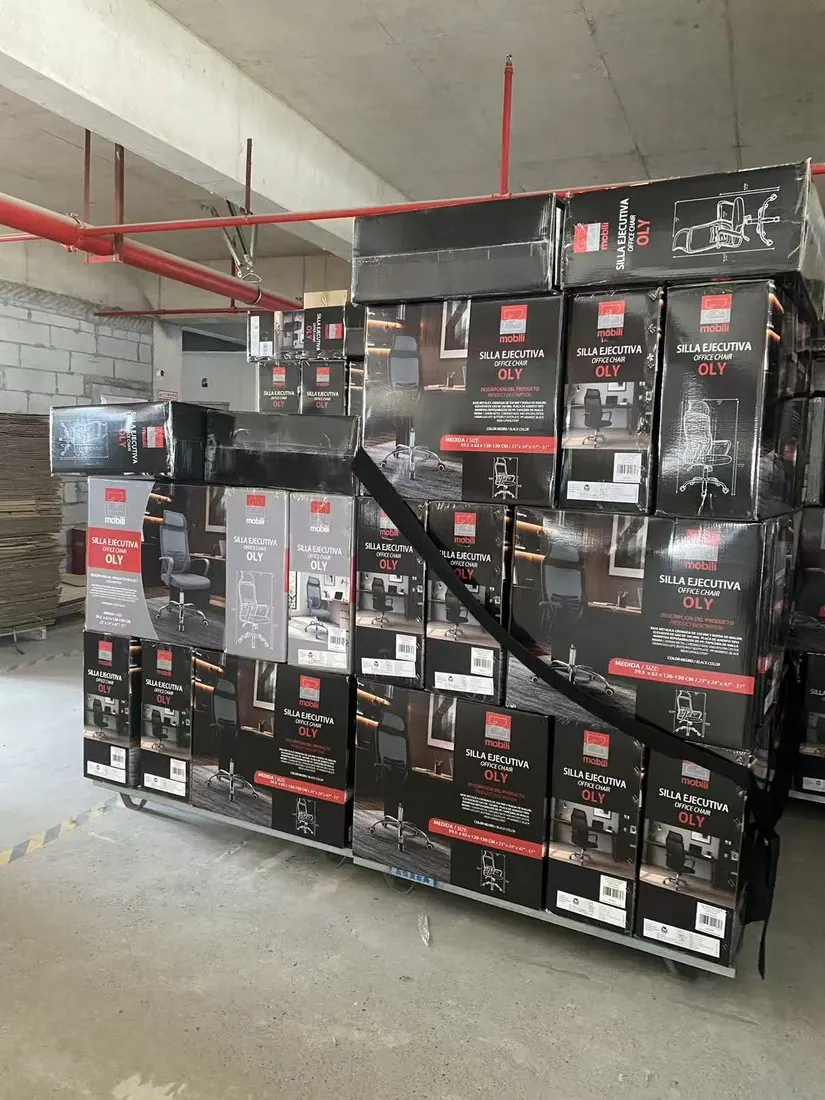
- Photographs with the batch visible. Not catalogue photos — the actual cartons, the actual label, the actual stack in the loading bay.
- Measured carton dimensions, with a tape in the frame.
- The container number and seal number, photographed at the doors.
- Non-conformities listed with quantities, not a sentence saying “quality is good”.
The cheapest insurance in this trade: a third-party inspection at USD 250 to 400 on a 550-piece order, booked before loading rather than after production. It costs less than one returned chair and it changes how the factory treats your order from the day it is booked.
What we send, every shipment
For each container we photograph the stacked cartons, the label close-up, the carton dimensions against the packing list, and the sealed doors with the seal number readable. If a customer asks for a third-party inspection we book it, and we would rather they did.
Ask for a sample inspection report with a quotation — the format tells you how the factory works before you place the first order.
Ask a questionAbout us